


Negative Pregnancy Test But No Period? 7 Real Medical Reasons Why
A late period with a negative home pregnancy test can leave you worried and unsure what to do next. If you have a missed period but not pregnant, the reason often relates to delayed ovulation, hormonal changes, or another health condition. A negative test also needs the right timing before it can reliably exclude pregnancy.
A menstrual cycle commonly lasts 21 to 35 days. A one-off delay of 5 to 7 days can happen. Repeated delays, missed cycles, or new symptoms deserve medical attention. Here are seven possible reasons, how to retest, and when to consult a gynecologist in Udaipur.
Why Did You Miss Your Period If You Are Not Pregnant?
Your period usually begins around two weeks after ovulation. When ovulation happens late, your period also arrives late. If ovulation does not occur, the usual hormonal sequence that triggers menstrual bleeding changes.
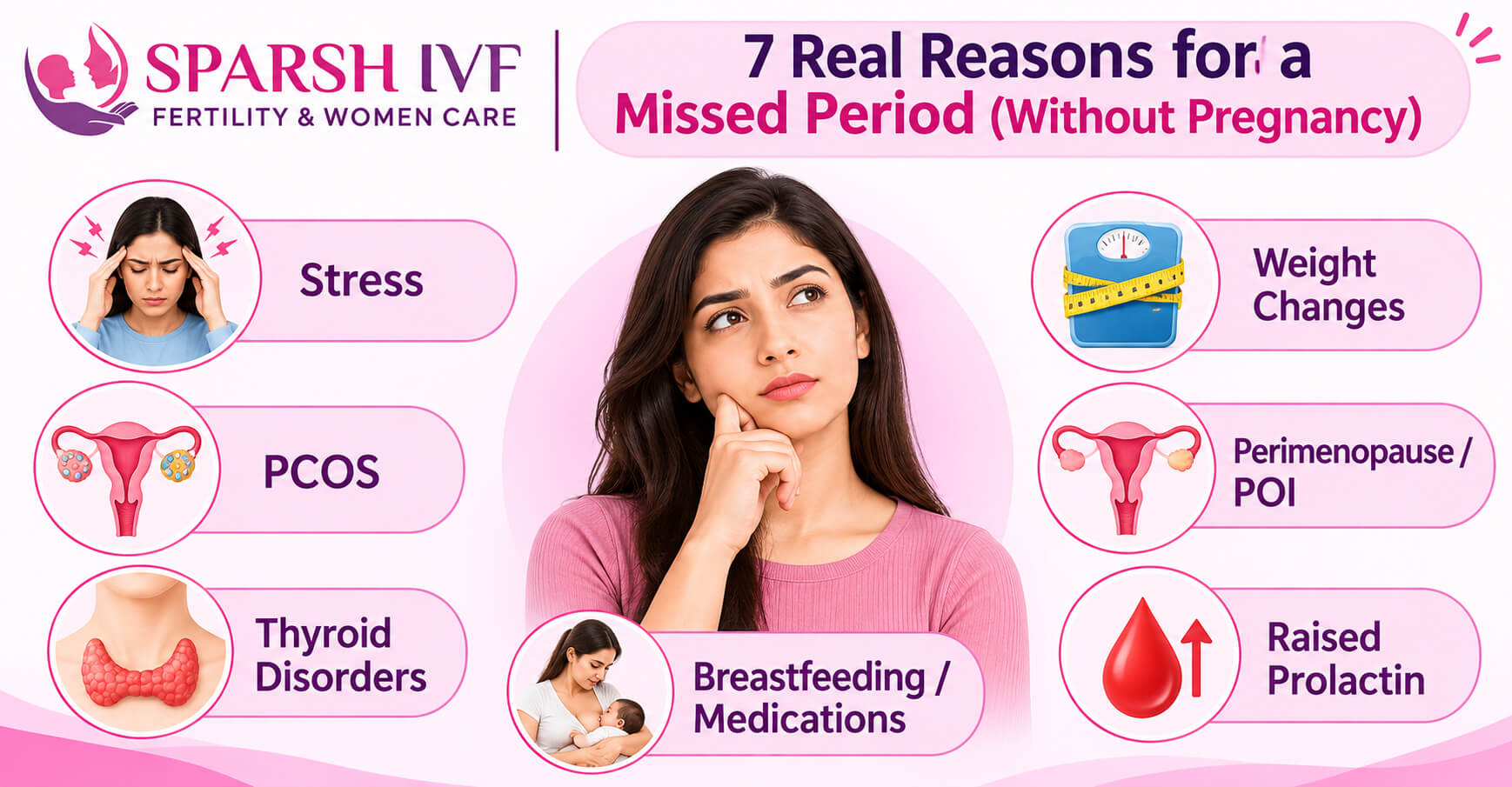
The common reasons for a missed period with a negative pregnancy test include:
- Stress: the body’s stress response can delay the brain signals that trigger ovulation.
- PCOS: irregular ovulation can cause long cycles or missed periods.
- Thyroid disorders: low or high thyroid hormone levels can disrupt menstrual function.
- Weight and exercise changes: low energy intake, rapid weight loss, or intense training can suppress ovulation.
- Perimenopause or POI: changing ovarian function can make cycles irregular.
- Breastfeeding, postpartum changes, contraception, or medicines: these can alter reproductive hormone patterns.
- Early testing or other conditions: testing before hCG rises, raised prolactin, and some gynecological conditions need consideration.
Real Reasons for a Missed Period With a Negative Pregnancy Test
1. High Cortisol from Sudden Physical or Mental Stress
Stress activates the body’s response system and changes the signals between the brain and ovaries. When stress is intense or prolonged, the hypothalamus can reduce the signals that help the pituitary gland release reproductive hormones. Ovulation then happens later or stops for that cycle.
Common triggers include exam pressure, demanding work shifts, family stress, poor sleep, fever, surgery, or a major change in routine. You may notice a delayed period alongside sleep problems, headaches, appetite changes, or fatigue. These symptoms do not prove stress is the only cause.
A short delay after a stressful month often settles when your routine improves. Track your cycle and seek assessment if delays repeat or you miss more than one cycle. Do not label persistent missed periods as stress without checking other causes.
2. Polycystic Ovary Syndrome (PCOS) and Ovulation Delays
PCOS affects the hormonal signals that regulate ovarian function. Many women with PCOS do not ovulate regularly. Without regular ovulation, the menstrual cycle becomes longer and bleeding can become unpredictable.
Look for a pattern of irregular periods, acne, increased facial or body hair, scalp hair thinning, or weight changes. Not every woman has all these signs. An ultrasound showing multiple small follicles does not confirm PCOS by itself; diagnosis uses symptoms, history, and appropriate clinical criteria.
A gynecologist may review androgen levels, glucose or metabolic health, and pelvic ultrasound findings. Read more about PCOS and Infertility and how it relates to ovulation and fertility.
3. Thyroid Imbalances (Hypothyroidism or Hyperthyroidism)
Thyroid hormones help regulate metabolism and interact with reproductive hormones. An underactive thyroid (hypothyroidism) can cause heavier or irregular periods and sometimes missed periods. An overactive thyroid (hyperthyroidism) can also disturb cycle timing and reduce menstrual flow.
Other clues include tiredness, feeling unusually cold, constipation, dry skin, or weight gain with hypothyroidism. Hyperthyroidism can cause palpitations, tremors, heat intolerance, anxiety, or unexplained weight loss. Symptoms overlap with other conditions, so a blood test is needed.
Doctors commonly start with thyroid-stimulating hormone (TSH). They add free T4 when the result or clinical picture calls for it. Treating a confirmed thyroid disorder can help restore more predictable cycles.
4. Rapid Weight Loss, Crash Dieting, or Intense Workouts
Your reproductive system needs enough energy to maintain normal hormone signals. Rapid weight loss, restrictive dieting, skipped meals, or a sudden increase in exercise can reduce the brain’s reproductive hormone signals. This can delay ovulation or stop it temporarily.
This pattern can occur with crash diets, intensive gym routines, endurance training, or a busy schedule that leaves little time for regular meals. Fatigue, feeling cold, reduced exercise performance, and ongoing weight changes are useful clues.
Avoid extreme calorie restriction and sudden increases in training. A clinician can review your weight history, nutrition, exercise routine, and hormone levels. The goal is to identify the cause and restore a sustainable balance, not simply to force a period.
5. Perimenopause or Premature Ovarian Insufficiency (POI)
Perimenopause is the transition before menopause. During this phase, ovarian hormone levels fluctuate and ovulation becomes less predictable. Periods can arrive early, arrive late, become lighter or heavier, or stop for a few months before returning.
Premature ovarian insufficiency (POI) refers to reduced ovarian function before age 40. It can cause irregular or absent periods, hot flushes, night sweats, vaginal dryness, sleep changes, or difficulty conceiving. Some women have few obvious symptoms.
A doctor interprets FSH and estradiol results alongside your age, symptoms, and menstrual history. Repeat testing is sometimes needed. AMH can help assess ovarian reserve in selected situations, but it does not diagnose POI on its own. Learn more about Premature Ovarian Insufficiency (POI).
6. Hormonal Shifts, Breastfeeding & Medications
After childbirth, reproductive hormones take time to settle. Breastfeeding raises prolactin, the hormone that supports milk production. Higher prolactin suppresses the signals involved in ovulation, so periods can remain absent or irregular while breastfeeding. However, ovulation can occur before the first postpartum period. Breastfeeding is not a guarantee against pregnancy.
Hormonal contraception also changes bleeding patterns. Pills, injections, implants, and hormonal intrauterine systems can make bleeding lighter, irregular, or absent. After stopping contraception, the natural cycle may take time to return, depending on the method and individual response.
Some medicines also affect prolactin or reproductive hormones. Tell your doctor about prescription medicines, over-the-counter products, supplements, and recent contraception changes. Do not stop prescribed treatment without medical advice.
7. Testing Too Early or Other Conditions Such as Raised Prolactin and Fibroids
Home pregnancy tests detect human chorionic gonadotropin (hCG), a hormone produced after implantation. If you test too early, hCG may still be below the kit’s detection level. Late ovulation also shifts the expected period and the best time to test.
Raised prolactin can interfere with ovulation and cause missed periods. Some women also notice milky nipple discharge when they are not breastfeeding. Headaches or vision changes need prompt medical review. Certain medicines and thyroid disorders can raise prolactin.
Fibroids more commonly cause heavy or prolonged bleeding, pelvic pressure, or frequent urination than absent periods. They still need assessment when symptoms suggest them. Depending on your history, the doctor may recommend pregnancy testing, prolactin, TSH, selected reproductive hormone tests, or pelvic imaging.
Need clarity about a delayed or missed period? Sparsh IVF in Udaipur offers hormonal evaluation, transvaginal sonography, and ovarian reserve assessment when clinically indicated. Dr. Monika Sharma brings over 25 years of experience in reproductive medicine and women’s health. Call +91-78783-05787 to enquire about an initial consultation.
Can You Still Be Pregnant After a Negative Test? (When & How to Retest)
Yes. A negative home test does not fully exclude pregnancy when you test too early. The test detects hCG after implantation, and hCG rises over the early weeks of pregnancy. If ovulation occurred later than expected, your period date and testing date are also later than you think.
Diluted urine can make hCG harder to detect, especially very early in pregnancy. First-morning urine is usually more concentrated, which makes it a better sample when repeating an early test. Follow the instructions for your specific kit.
How to retest properly:
- If you tested before or just around your expected period, wait 5–7 days before repeating the test, unless symptoms require earlier medical care.
- Use your first-morning urine and avoid drinking excessive water before testing.
- Check the kit’s expiry date and read the instructions before opening it.
- Follow the stated waiting time and read the result within the kit’s time window.
- If the second test is negative and your period still has not started, contact a gynecologist. A blood beta-hCG test may be appropriate.
Do not wait to repeat a test if you have severe pain, fainting, or unusual bleeding. Seek urgent medical assessment.
Quick Comparison: How to Tell What Might Be Causing Your Late Period
Symptoms help guide the assessment, but they cannot confirm a diagnosis. Your doctor selects tests based on your age, cycle history, symptoms, medicines, and pregnancy possibility.
| Possible Cause | Key Symptoms to Watch | Cycle Delay Pattern | First Recommended Test |
|---|---|---|---|
| Stress or sleep disruption | Recent stress, poor sleep, illness | One delayed cycle or variable timing | Cycle and health history; further tests if persistent |
| PCOS | Acne, facial hair, irregular cycles | Repeated long or missed cycles | Clinical assessment; selected hormone tests and ultrasound |
| Thyroid imbalance | Fatigue, weight or temperature changes, palpitations | Recurrent irregularity or flow changes | TSH; free T4 when indicated |
| Weight loss or intense exercise | Restrictive eating, heavy training, weight change | Delay after energy or exercise changes | Nutrition and exercise review; hormone tests if needed |
| Perimenopause or POI | Hot flushes, night sweats, vaginal dryness | Increasingly irregular or absent periods | FSH and estradiol, interpreted clinically |
| Breastfeeding, contraception, or medicines | Recent childbirth, nursing, method or medicine change | Absent or changed bleeding pattern | Pregnancy test if relevant; medication and postpartum review |
| Early test, raised prolactin, or pelvic condition | Early test, nipple discharge, pelvic pressure or heavy bleeding | Depends on timing and underlying condition | Repeat urine/blood hCG; prolactin or pelvic ultrasound as indicated |
For persistent cycle changes, see Irregular Periods and Infertility and discuss whether a targeted Hormonal Evaluation is suitable.
When Should You Consult a Gynecologist in Udaipur?
Arrange a gynecology appointment if you miss 2 to 3 cycles, or if your periods repeatedly become irregular. Seek assessment sooner if you have sudden facial hair growth, worsening acne, milky nipple discharge when you are not breastfeeding, hot flushes before age 40, or unexplained weight changes.
Seek urgent medical care now if you experience severe or one-sided lower abdominal pain, shoulder-tip pain, fainting, dizziness, or heavy bleeding—especially if pregnancy is possible. These symptoms can indicate an ectopic pregnancy, where a pregnancy implants outside the uterus, most often in a fallopian tube.
An ectopic pregnancy can cause internal bleeding and become life-threatening. A urine test can be negative or faint in very early or abnormal pregnancies. Do not use a negative home test to dismiss one-sided pain or fainting. Emergency assessment may include blood beta-hCG testing and ultrasound.
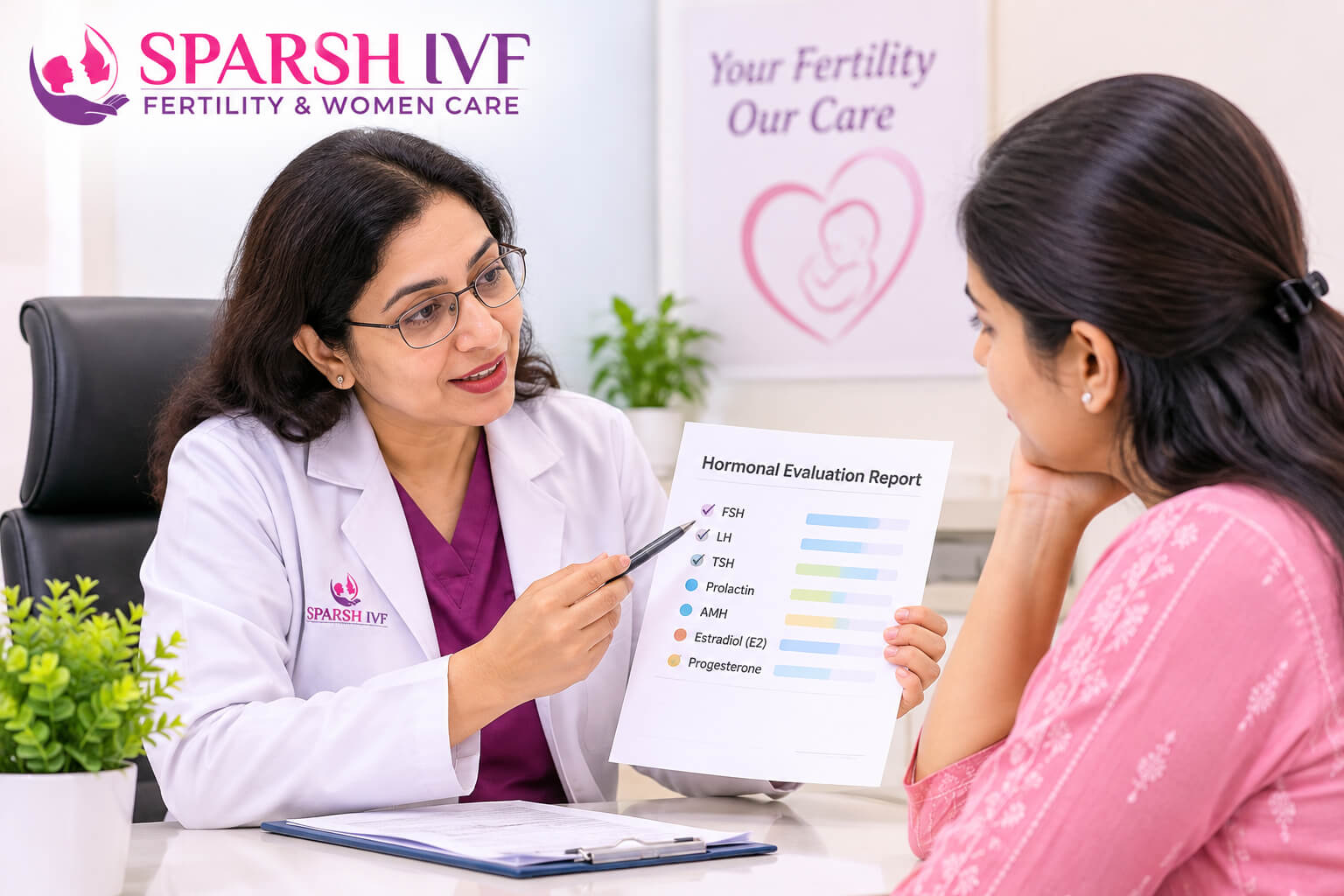
At Sparsh IVF, a clinician reviews your cycle pattern and symptoms before recommending tests. Assessment can include TSH, prolactin, FSH, LH, AMH, and transvaginal sonography (TVS), depending on the clinical need. Read about Transvaginal Sonography (TVS) and how it helps assess the uterus and ovaries.
Comments are closed